Thursday, March 22, 2018

Top 100 Albums of the 1970s - #63 - Cluster - Zuckerzeit (1974)

Before they were Cluster, Hans-Joachim Roedelius and Dieter Moebius were Kluster, a German experimental band that churned out three albums of noisy, metallic, experimental music full of tape loops and cacophony before the name change. C is inherently more gentle than K, and the new Cluster reflected that, although their first album was still mostly spacey drones and electronic swoops with little resemblance to what most people consider music (they didn't even bother with song titles, simple using the track lengths as identifiers).

By the time they got around to Zuckerzeit, which translates as "Sugar Time", the duo had started leaning more towards traditional song structures and actual melodies. They ditched Krautrock legend Conny Plank as producer and brought on board Michael Rother, another Krautrock legend famous for his work with Neu!, and the difference is immediately apparent.

None of this is to say that Zuckerzeit is in any way normal. The music is still wildly experimental and sounds distinctly homemade, constructed as it is from clunky analogue synthesizers that are charming in their own way, but not exactly built for slick, highly produced pop singles. Still, the gang gives it their best attempt.

The songwriting duties are split evenly here between Moebius and Roedelius, and there is an immediately evident difference in their styles. Roedelius has a gift for melody, and embraces the chugging Motorik rythms Michael Rother is known for. His compositions like Hollywood, Marzipan, and Heisse Lippen sound almost radio-friendly.

By contrast, Moebius is obviously the more experimental of the two. His tracks seem to focus on playing around with loops and rhythms. This makes them less immediately accessible to modern listeners, but I find them a fascinating counterpart to the honey-sweet electro-pop of Roedlius. Although Zuckerzeit is a distinctly electronic record, the Moebius track James is mainly built from guitar loops.

The albums longest track, Rota Riki, is a Moebius composition that I find particularly interesting.  It sounds an awful lot like the early sequencer experiments done by Raymond Scott in the 1950s. It's an abstract study in synthesized rhythms and changes in tape speed, and while Scott's work was used for sound effects in advertisements, here the same style of music is presented for active listening.

Zuckerzeit is undeniably crude by today's standards, but that doesn't make it any less fun or charming. Additionally, its influence on later electronic music is pretty clearly felt. I would be hard to imagine modern IDM or ambient electronica without pioneers like Cluster.

Wednesday, March 21, 2018

Top 100 Albums of the 1970s - #64 - Iggy Pop - Lust for Life (1977)

Where Iggy Pop's solo debut, The Idiot, was nocturnal, brooding, reserved, experimental, and Germanic, Lust for Life released less than a year later, is almost the complete opposite. And where the Idiot felt like a David Bowie album with Pop on lead vocals, this one feels more true to Iggy's real personality, despite the continued presence of Bowie as major collaborator.

While not exactly sunny, the songs on Lust for Life are certainly more upbeat and energetic. It's a record for the day rather than the night. Starting with the title track opener, it's clear that what we're in for is a celebration, if a somewhat twisted and cynical one.

The record also feels much more American, where the Idiot was decidedly European in its approach. Iggy was born in Michigan, and perhaps this is another sign of his wresting creative control from the very English Bowie. The material here feels a lot more similar to his work with the Stooges than to Bowie's contemporaneous Low or Heroes albums.

This is echoed on the track Success in which Iggy confidently declares "Here comes success!" and on tonight the line "everything will be all right tonight" rather eclipses the rest of the song's lyrics about death. I'm not sure whether the irony is lost, or whether it just exists on multiple levels, but one can't help feeling that every will in fact be all right, in spite of all of life's darkness.

As with the last outing, the lyrics and vocals are handled by Pop, and the instrumental duties are largely left to Bowie and a couple of other musicians. Of particular note is guitarist Ricky Gardiner, who write the music for The Passenger, although he rarely gets acknowledged for it.

The song is, of course, an absolute classic. One of those rare hits like Werewolves of London which manages to sustain its energy over a repeated four-bar chord progression that stays the same during verse and chorus alike. The lyrics are apparently about the drifting, nomadic life style of a rock star, alays on the move, never in the same place for more than a little while. I guess Iggy felt thta in a sense, he was just along for the ride. A little bit sad, I suppose, but you'd never know it from that iconic "la la la" chorus.

At this point in the seventies, Iggy Pop was a total wreck, ravaged by substance abuse and even institutionalized for a while. Maybe it's reading too much into his lyrics, but I feel like Lust for Life, in part, is about his determination to pass through the darkest parts of his life and come out the other side a survivor. Whether it was intended or not, that's what he eventually did, having left behind some great records for the rest of us to enjoy.

Sunday, March 18, 2018

Top 100 Albums of the 19702 - #65 - Neil Young - On The Beach (1974)

I wasn't a Neil Young fan when I started this list. I found his voice too high-pitched and his songs too folky for my liking. But the more I listen to, the more I consider myself a convert. In particular, Young's simple yet inventive approach to guitar solos is inspiring. One of the things I always loved about Keith Richards was his ability to do great things with just a handful of notes. Young takes it a step further, sometimes soloing on just one or two notes, yet managing to wring emotion and creativity out of his guitar nevertheless.

On The Beach achieved something of a mythical status due to two decades of unavailability. For reasons as opaque as his lyrics, Young refused to issue the album on CD until 2003, when a massive petition by fans finally convinced him. Most "lost" albums fail to live up to the imaginations of fans, but it must be admitted thta this one is pretty good. A tight, bluesy seven songs that blend rock, country, and the bitter invective of Young's lyrics. Like Elvis Costello, he manages to be nasty will style sounding pleasant, which is really the trick to this kind of music.

The opener, Walk On, has hit single written all over it, with its catchy chorus and bouncy bass guitar part. The rootsy, banjo-driven For The Turnstiles would sound out of place on most rock albums, but works great here in spite of, or because of, the fact that it sounds like it could have been recorded sometime around the 1920s.

Throughout, the band is excellent, particularly the rhythm section consisting of multiple players on bass and drums. They know how to compliment Young's soloing without overpowering it. Sure, this band is not Crazy Horse, but I'm not sure their aggressive style would have worked well with these songs anyway.

Like the cover art, the title track plays around with the juxtaposition of opposites. It would be easy to think that a record called On The Beach would be a fun-in-the-sun party album. Instead, we get associations that are less frequently made, but no less apt. Words like "windy", "stranded", "exposed" and "bleak" come to mind. The fact that three of the song titles contain the word "blues" is surely no accident. This is not a happy Neil Young

Young originally wanted the two sides of the record reversed, making Vampire Blues the record's closer, and the title track its opener.} I think the running order as released is more powerful, however, as it moves from the almost happy Walk On through various levels of depression, through the mournful harmonica and clip-clop drums of Motion Pictures that sound like an actual farewell.

Finally, the album concludes with the 8-minute dirge of Ambulance Blues. This running order presents a more linear progression that takes the listener on a journey rather than just being a collection of songs. On The Beach is a melancholy album to be sure, but there's something not altogether hopeless about it too. As other reviewers have pointed out, this was Neil Young saying goodbye to despair and choosing to Walk On to more cheerful pastures.


Wednesday, March 14, 2018

Top 100 ALbums of the 1970s - #66 - Big Star - Third/Sister Lovers (1978)

I sometimes think of post-punk as the third stage in the classic "5 Stages of Grieving" paradigm. Punk is anger. Kids with guitars were lashing out at the system, making a lot of noise and having no small amount of fun while they did it. It didn't matter if they couldn't play. It didn't matter if their recordings were coated in a layer of distortion or white noise. That was all part of the honesty of it all.

But as the 70s progressed, that level of anger simply wasn't sustainable, and so punk rockers began to burn out, slipping into the third stage, depression. The aesthetics were still there. The amateur singing/playing, the lo-fi recordings, the simple song structures, but gloom and melancholy were now inescapable. The fact that this album is called "Third" ties into this theory a little bit. What doesn't help is that fact that Third was actually recorded in 1974, before punk proper even had a chance to get going. Like so many of the albums on this list, I guess it was ahead of its time.

Third/Sister Lovers marks the final album from Alex Chilton's Big Star, as well as his own personal breakdown. The recordings were such a mess that they didn't find an official release until years later, and even then no one couldn't agree on an "official" track listing. 

There's a lot of tragedy here, which is an odd juxtaposition with the music itself. On song after song, Chilton manages to conjure up lovely, sweet melodies, arranged simply for maximum pop appeal. But there's something wrong. Most bands would be thrilled to come up with songs like "Thank You, Friends", "O, Dana", and "Jesus Christ" but Chilton sounds downright miserable as he sighs and grumbles his way through the lyrics.

Perhaps the inclusion of a Velvet Underground cover, "Femme Fatale", is a clue to how the band was really feeling at the time. The Velvets were always the best at barely cloaking disfunction behind well-crafted, but inexpertly performed pop gems. It seems like Big Star owes a debt to them in more ways than one.

One of the things I like about this, and other albums on the list by Nick Drake and the Modern Lovers, is how raw, honest, and personal the music is. Hemingway once said that, to be a writer, all you had to do was sit down at a typewriter and open a vein. I feel like these albums are embracing that sentiment in musical form.

There were a lot of leftover outtakes from these sessions that didn't make the original release, although subsequent reissues have restored most or all of them. Most fun are covers of "Nature Boy" and the Kinks' "Till the End of the Day." The truth is, little details like the inclusion of extra songs, or even the track order, make little difference. It's a solid album, no matter how you listen to it.

Friday, February 23, 2018

Top 100 Albums of the 1970s - #67 - Pink Floyd - Meddle (1971)

Psychologists speak of the Primacy Effect and the Recency Effect to describe how our brains tend to remember experience that come first, and come last respectively, with less attention paid to those in between. This may explain why people remember Meddle as being a better album than it is. As an album, it's bookended by two blindingly good tracks, with relatively unremarkable filler sandwiched in the middle.

Meddle is unquestionably a transitional album, bridging the gap between the band's early psychedelic experimentalism and the polished art rock productions of their classic period. Coming just before their breakthrough Dark Side of the Moon, Meddle finds the band pushing boundaries while not quite abandoning their roots just yet. The results are at times awe-inspiring.

Side one opens with One of These Days, a largely instrumental piece that features Roger Waters' bass guitar run through a delay effect and surrounded by wind sound effects and increasingly intense guitar patterns from David Gilmour. As simple as the concept is, it really delivers, playing with rhythmic drive as a vehicle for textural exploration and atmosphere. Towards the end, a distorted vocal proclaims "One of these days, I'm going to tear you into little pieces!" It's not clear where this hostility is coming from or where it's directed, but it's certainly effective. A brilliant start to the record.

Next, A Pillow of Winds is a pastoral psychedelic ballad, leading into Fearless, which follows in the same vein. These songs feel like the remnants of an earlier band being shaken off to make way for the new sound. They are not bad, but they don't really live up to what we would come to expect from Pink Floyd in the near future.

The album then reaches it's nadir, with the two songs, San Tropez and Seamus. The former is a playful, tropical throwaway that really doesn't fit with the otherwise gloomy and watery feeling of the record, and the later is a regrettable, low fidelity twelve-bar blues about a dog, complete with howling and whining sound effects. Besides being actively annoying to listen to, it is beneath the band's talents.

Side two is comprised entirely of the 21-minute epic Echoes, and here we see the strongest hints of what Pink Floyd was about to become. Beginning with a distinctive sonar beep and morphing into an inspired jam session, Echoes showcases how well the individual band members play together, and how inventive they can be. The song's main riff was ripped off by Andrew Lloyd Webber for the title track to Phantom of the Opera, but that does nothing to lessen its power here. Though the track runs for over twenty minutes, I could honestly listen to it for an hour. It's arguably an even more effective use of the long-form piece than even Shine On You Crazy Diamond, and if anything its more primitive nature just adds to its atmosphere.

The lyrics from Echoes state that "everything is green and submarine", and thta would be an apt description of Meddle as a whole, from the cover art to the watery sound of the production. In that respect, it's a success as a quasi-concept album, even though the majority of the individual tracks are not too memorable. While I don't think it lives up to the very best of Pink Floyd, it certainly has its moments, and is notable for the direction it pointed in the band's forard trajectory.

Thursday, February 15, 2018

Top 100 Albums of the 1970s - #68 - Herbie Hancock - Head Hunters (1973)

Herbie Hancock's Head Hunters is one of the best selling jazz records of al time, and with good reason. It's catchy, it's fun, it's exciting, and it broke important new ground in updating jazz to fit in with the changing times. Along with Miles Davis, Hancock can be regarded as one of the great innovators, not content to fall back on previous structures and textures that had long since been worn into the ground.

Talking about his inspiration for Head Hunters, Hancock said that he felt like the music his band had been making was getting too lofty and ethereal. He wanted something more down and dirty, more earthbound. With this instinct in hand, it's not surprising that he found his way towards funk, the dirtiest, earthiest music around.

In the early 70s, a lot of Prog groups were inspired by jazz, and were experimenting with working it into a rock context. Their efforts led to a whole genre of jazz/rock fusion, but none of those records approaches what Herbie did in transforming jazz into a truly electric medium. Armed with electric pianos, clavinets, and most importantly, the distinctively searing Arp synthesizer, Hancock and his sextet sank their teeth into funk grooves in a way that was anything but academic, while maintaining the spontaneity and virtuosity of high-octane jazz. Over the course of just four tracks, he crafted an album that remains thrilling more than four decades later.

Side one is dominated by Chameleon, a fifteen minute piece built around a syncopated bass ostinato, with plenty of room for soloing. The way the instruments gradually build up, one on top of the other, is a blueprint for many a funk or electronica tune, and it allows the listener to gradually get used to simple things before moving into the wilder reaches of virtuoso musicianship. 

The second track, Watermelon Man, is a rerecording of a tune first done on Hancock's debut album, but this time arranged in a way that imitates African Pygmy music, with a rhythm section build around blowing air across the top of a beer bottle.

Side two kicks off with Sly, an uptempo workout for the band complete with brain-melting solos. In fact, the final track, Vein Melter, seems like it would have been a better title for this one. Instead, the last nine minutes of the record are taken up by a psychedelic cooldown, perhaps suggesting that the title is alluding to narcotics.

I'm not the biggest fan of jazz in general, but I have to confess that Head Hunters is great. It combines catchy tunes, infectious rhythms, astounding musicianship, and an electric funkiness that I just love. It certainly stands the test of time better than a lot of fusion records from this period.

Monday, February 12, 2018

Top 100 Albums of the 1970s - #69 - Faust - Faust IV (1973)

Ah, Krautrock. That weird, wonderful, and ephemeral genre of experimental rock music from Germany that was big in the 80s, and then suddenly seemed to go away. It takes a certain kind of mindset to appreciate it, but when it's good, it's really really good.

Faust were one of the three major bands of the genre, sharing the limelight with their monosyllabic brethren Can and Neu!. Actually, there were hundreds of Krautrock bands kicking around back then, and lots of good ones, but these are the three that got the most airplay and recognition for being innovative and unique.

With their debut a couple of years earlier, Faust had put together a dense slab of Teutonic sound collage and rock pastiche, focusing on lengthy pieces and abstract structures. Here, on their fourth record, they've mellowed out a bit, and have started writing actual songs, albeit not without the same penchant for experimentalism and a wacky sense of humor. In fact, it's hard to know whether the first track is meant to be a joke.

Simply titled "Krautrock", the album's opener could well be a sarcastic comment on the British perception of the band and its contemporaries. The song is eleven minutes of chugging, droning, rock groove that sounds more like Neu! than anything Faust has done previously. It's repetitive in the extreme, and could be a gentle jibe at the style of their contemporaries. Regardless, it's a fun listen.

"Krautrock" leads abruptly into The Sad Skinhead, which is a bizarre (and  not entirely successful) attempt at reggae, for some reason. Far better as an example of the band's songwriting abilities is Jennifer, which is pretty and dreamy, and would later inspire a similar track by the Eurythmics. (I can't confirm that the two songs are related, but they both have the same name, refer to refer to red hair, and share a slow, hypnotic quality, so I choose to believe it.)

The second half of the album is more abstract, featuring studio experiments, instrumentals, and callbacks to the band's second album. The last track, It's a Bit of a Pain, intentionally interrupts a lovely acoustic melody with an annoying squeak sound, once more showcasing the band's warped sense of humor. 

I'll be honest: although I love Krautrock, Faust IV is far from my favorite album in the genre. I like their first two better, as well as many works by Can, Neu!, Ash Ra Tempel, Floh De Cologne, Cluster, Harmonia, La Dusseldorf, Popol Vuh, early Tangerine Dream and Kraftwerk and... well, you get the idea. Faust IV is a fine record, but not what I would have chosen to represent the genre at #69. But never fear! There's still several Krautrock albums that appear later on this list, so stay tuned!

Friday, February 2, 2018

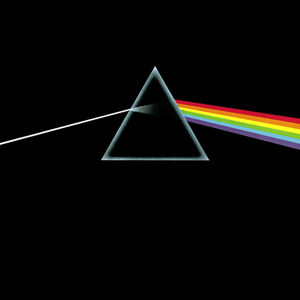
Top 100 Albums of the 1970s - #70 - Pink Floyd - Dark Side of the Moon (1973)

What can one say about Dark Side of the Moon that hasn't already been said? For many people, this album would not only top the list of the best albums of the 1970s, but the best of all time. And here we find it at a lowly #70. Personally, I wouldn't even rank it as my favorite Pink Floyd album. Nevertheless, it is undeniably a great achievement in music and in terms of influence alone is worth celebrating, so let's dive in.

Dark Side of the Moon represents the moment when a somewhat eccentric psychedelic band really got its act together. Previous Pink Floyd albums had moments of brilliance on them, but they tended towards self-indulgence, excessive experimentalism, and the inclusion of filler tracks to round out the running time. With Dark Side, they produced a tightly composed, semi-concept album with no wasted space, as well as some of their most memorable tunes. It would set the stage for the next two albums, Wish You Were Here and Animals, which both surpass this one in my opinion, but we have to award points for coming first.

While it's true that Dark Side sees the band at their sharpest, both in terms of songwriting and performance, I think the lion's share of the credit for the success of the album as a whole is due to engineer Alan Parsons, who would later find fame (albeit on a less extravagant scale) with his own band, The Alan Parsons Project. In this age of digital music editing software and laptop wizardry, it's easy to forget just how difficult it was to perform complex edits back in the day.

It's astonishing to think that the intricate 7/4 rhythm of cash registers and jingling coins at the beginning of money, or the cacophony of chiming clocks in Time, were produced using a razor blade to slice and splice physical tape together with almost superhuman precision. These effects go a long way towards giving the album its unique charm and cohesion, and Parsons is the man responsible for them.

Still, Roger Waters and David Gilmour were no slouches either. Waters' bitterly sarcastic lyrics and memorable bass hooks (particularly in Money) are the work of a master, whereas Gilmour's trademark slow and dreamy guitar solos lend a soaring grandeur to the music, and once again prove that effective guitar playing need not be about speed or technical virtuosity. Gilmour pours more emotion into his playing than any dozen hair metal shredders, and is rightly regarded as a guitar hero for it.

Lyrically, the songs have their fair share of memorable lines. "Hanging on in quiet desperation is the English way" manages to be poetic, poignant, and catchy. And while I don't agree with Roger Waters' politics, his vitriolic diatribe against Money is as enjoyable now as it ever was. Even when there are no lyrics at all, as in The Great Gig in the Sky, the epic vocal solo sends the listener on quite a thrill ride.

Dark Side of the Moon may not be the best album of all time or even of the 1970s, but it is certainly a stone cold classic thta belongs in every record collection worthy of the name. And yes, I have lined it up to the Wizard of Oz and it does work. Check it out sometime. It's not just for stoners anymore.

Thursday, February 1, 2018

Top 100 Albums of the 1970s - #71 - James Brown - The Payback (1973)


First of all, an apology for abandoning this project for so long. National Novel Writing Month, followed by the December holidays got in my way and I'm only now regaining my momentum. Nevertheless, I'm resolved to complete this project sooner or later, so onward and upward!

To be honest, I never thought I would like James Brown. He just didn't seem like my thing. But then I had the chance to see him live in concert shortly before his death, and it remains one of the best shows I've ever seen. The man knew how to put on a show, and his band is one of the tightest in the business.

But this review is about his 1971 album, The Payback, not the performance I saw in the early 2000s. So how does it stack up? In general, I'd say this record lacks some of the dynamism and energy of the live performance. I know it's regarded as one of his finest, but it lacks immediate crowd pleasers like Living in America or Sex Machine. The tracks here are generally slower in tempo, simpler in their composition, and lacking the melodic hooks that made the aforementioned songs so great.

There's a curious stasis to this kind of music. A funk groove, usually of not more than two bars, repeats over and over again, while James shouts, hollers, screams, grunts, and emotes over the top. Sometimes there's a brief solo or a horn section sting, but that's pretty much it. It almost reminds me of minimalist music in the vein of Philip Glass in that it uses motion to create a sense of stillness. It's weird to think of those two styles of music as related, but focus on groove and repetition is certainly common in both.

Lyrically, the songs lack much of substance. James makes it very clear that he wants revenge on somebody for something, any other details or funny. Elsewhere he apologetically admits that he is just a man, but that he's doing the best he can, in a rre moment of soul vulnerability. 

Towards the end of the album, the songs get longer and the jams get spacier. I'll venture another unlikely comparison in that these tracks start to resemble similarly groove-oriented efforts by Krautrock and space rock artists. Of course, the horns, wah-wah guitars and general funk atmosphere lend the music a totally different feel, but mechanically, a jam is a jam, and the album's closer, Mind Power, is a particularly great one.

The Payback is a double album, which seems a little unnecessary, given that most of the songs contain a small amount of material stretched out into seven, eight, or even twelve minutes. James Brown is certainly a charismatic and talented performer, but I can't help but feel like his abilities are better showcased elsewhere.

Monday, October 2, 2017

Top 100 Albums of the 1970s - #72 - King Crimson - Red (1974)

It probably says a lot about King Crimson frontman Robert Fripp's sense of humor that the cover of an album called Red is almost entirely black and white. Or maybe it's just a stark and somber image of a band falling apart, as King Crimson almost always was. For their last album of the 1970s, the group had been reduced to the power trio of John Wetton on bass and vocals, Bill Bruford on drums, and Robert Fripp on guitar, helped along in a few places by former bandmates Ian McDonald, Mel Collins, and David Cross.

The album consists of just five tracks, but boy do they pack a punch. All of the experiments of the previous two albums come to fruition here in perfect concert. It's simultaneously a shame and fitting that the group disbanded after an achievement like Red.

The title track, which opens the album, is a dense, heavily overdubbed slab of instrumental proto-metal, built on riffs in odd time signatures and still sounding ahead of its time more than forty years later. It's hard to imagine any progressive metal or math rock band not devouring and internalizing this track.

The second song, Fallen Angel, is a lyrical ballad reminiscent of the band's debut album. Still, never content with simplicity, the track is spiced up by virtuosic drumming, the creative use of guitar harmonics, squalling sax solos, and the rarely heard Oboe setting on Mellotron, the most characteristic of all progressive rock instruments.

One More Red Nightmare develops themes from the title track into a somewhat more traditional song, although retaining the weird overtones of the original. I don't know what Bill Bruford is using as a drum kit here, but it sounds like he went out back behind the studio and found some trash cans to bang on. Maybe there are some flanged handclaps in there too? Whatever the case, it lends the whole song a very unique feel.

Providence is another instrumental, an eight-minute live track that, like the previous album, showcases the band's improvisational skills. This leads into the monumental Starless, a track that was mysteriously rejected from the previous album, but which combines emotion and virtuosity into the most thrilling twelve minutes in all of progressive rock. It's a hell of a way to close this chapter in the band's history.

I was never keen on 80s King Crimson, when New Wave and post-punk had eclipsed the classic sound of Prog Rock, so for me this album always represented the end of King Crimson as I knew them. While it's still not my favorite in their catalogue, it's hard to deny that the band ever sounded any better and more together than they do here. Truly a wonderful record that stands out, even for such a consistently creative and talented band.

Tuesday, September 26, 2017

Top 100 Albums of the 1970s - #73 - Van Halen (1979)

In my review for Jimi Hendrix's Band of Gypsys, I mentioned that I think there have been three major revolutions in guitar technique since the invention of the electric version of the instrument. The first was Chuck Berry, who really developed a style unique to electric guitar, rather than simply mirroring acoustic technique, the second was Hendrix, who exploited feedback and distortion in ways no one ever had before, as well as extending the possibilities for the instrument in general. The third revolution came at the lightning fast hands of Eddie Van Halen.

The technique of tapping on the guitar fretboard with the right hand was hardly new; blues musicians had already been using it for decades, and Brian May performed a memorable electric version on Queen's 1976 album News of the World. But this occasional dabbling for the purposes of special effect could never have prepared the world for what Eddie managed to accomplish through systematically employing the technique in a heavy metal context. The resulting sound influenced every hard rock and metal band of the 80s, and defined entire genres of music. 

The instrumental that forms the second track on Van Halen's debut album, entitled Eruption, remains jaw dropping to this day, and learning it is a rite of passage for aspiring shredders everywhere. The world of the electric guitar would never be the same. But it's too easy to get hung up on Eddie Van Halen's guitar chops, for while they certainly do a lot to add character to the band's first album, there is a lot more going on than simply instrumentalists showing off.

No review of Van Halen would be complete without mention of David Lee Roth, the frontman whose raw energy and enthusiasm carried Van Halen from something rooted in technical proficiency to a real rock band, driven as much by adrenaline as musicianship. If there is any doubt that Diamond Dave's yelping and hollering were instrumental to making Van Halen great, take a listen to the pale efforts of Sammy Hagar to inject enthusiasm into an otherwise limp and plaid out band. Regardless of whose name is on it, without Dave, Van Halen just wasn't Van Halen.

Then, of course, there are the songs themselves. While there are admittedly a couple of duds, these boys sure knew how to write a catchy tune. It's astonishing to think that Eddie was almost too embarrassed to perform Ain't Talkin' 'Bout Love, maybe the best song on the album, because it is only based around two chords. Elsewhere, I'm The One, Runnin' With The Devil, and Atomic Punk keep the listener engaged with unrelentingly high-octane performances. I'm particularly amused by the faux-retro Ice Cream Man, which starts off as an acoustic number before turning into another crazy shred-fest.

Even the Kinks' You Really Got Me, a great tune but arguably the most over-covered song in the rock canon, finds new life under the fingers of Eddie and in the vocal chords of Dave. The energy they give the song makes the original, once a roaring rock anthem, sound almost quaint in comparison.

I'll admit that Van Halen is not one of my favorite bands, and I find that their schtick gets old after a while, but in terms of both energy and influence on later acts, it's impossible to deny that their debut, coming right at the end of the seventies, certainly ranks as one of the most important albums in rock.

Wednesday, September 13, 2017

Top 100 Albums of the 1970s - #74 - Leonard Cohen - Songs of Love and Hate (1971)

I've been remiss in my music review duties lately, partly due to being busy and partly due to a lack of inspiration. In truth, this album is pretty dreary and it took some time for me to come up with something to say about it.

As the cover indicates, Songs of Love and Hate is a bleak, monochromatic collection of songs tackling such cheery subjects of death, suicide, and more death. Comparisons with other singer-songwriters are inevitable. Cohen is more somber than Bob Dylan, less personable than Johnny Cash, and more authentic than Tom Waits. His earnest and painful writing in tinged with an icy frost of alienation.

Even in the relatively uptempo number, There Are No Diamonds in the Mine, when backed by gospel singers and a twangy country lead guitar, Cohen comes across as desperately unhappy. I suppose that's part of his appeal. Where Dylan cuts his bitterness with jokes, Cohen maintains steadfastly committed to his grim outlook on life.

Apocalypse always feels just around the corner, with Cohen serving as a prophet resigned to the fate of the world, an aura that is helped by larger than life topics such as Joan of Arc and the suicidal ruminations of Dress Rehearsal Rag,

One of the surprising things about the record is Cohen's intricate style of guitar playing, over which his world weary voice drones and groans. Particularly evident in the album's opener, Avalanche, his style is a blend of classical guitar techniques and folky fingerstyle that's terribly effective in what is otherwise a very stripped down form of music.

Another oddity is the inclusion of a single live track, seemingly for no reason. It maintains the overall feel of the album, however, and doesn't really detract from its mood.

I have to be in a pretty gloomy mood to enjoy this sort of music, but when I am, it really hits the spot. There's definitely something to be said for wallowing in all of humanity's most negative emotions at once. It can be cathartic and therapeutic, and after all, isn't that what music is all about?

Monday, August 21, 2017

Top 100 Albums of the 1970s - #75 - Led Zeppelin - Houses of the Holy

Led Zeppelin always liked to experiment with different genres, but perhaps never so much as on their fifth album, Houses of the Holy, in which the band stretches itself beyond their hard rock/proto metal roots to create a record that enigmatic, fascinating, and at times brilliant.

What Houses of the Holy lacks in a unified sound or consistent themes, it makes up for in exuberance and experimentation. It's not always successful, but it does include some of the highlights of the Led Zeppelin catalogue.

The album's opener, The Song Remains the Same, is a traditional Jimmy Page guitar-workout rocker that is made no less powerful by its familiarity.  Next, The Rain Song finds the band in a mellower mood than is typical for them, with Jimmy Page's twin guitars separated out into the stereo channels, providing a wide and full sound that soon is joined by warm strings. By this point, Page's layered guitar technique was well established, but this is a good example of how far the band had come in terms of production, and really sounds great through headphones.

The Tolkien-influenced flights of fancy are still around, with songs like Over the Hills and Far Away preserving the Celtic influences that allowed Zeppelin to give a nod to its native Britain while still reveling the in the sounds of American blues. 

On the second half, things start to get a little odd. D'Yer Maker (pronounced Jamaica) is a particularly weird genre experiment in which the band attempts reggae. The result doesn't exactly sound like something out of the Caribbean, but it is a fun enough to forgive its technical and stylistic shortcomings. 

No Quarter is even weirder, but instead of being a pastiche, it comes across as a genuinely frightening piece of nightmare music. It also proves that Robert Plant can do things with his voice other than shriek. It's one of my favorite things the band has ever done, and resembles nothing else in their oeuvre.

Elsewhere, the songwriting suffers, as on the mediocre Dancing Days and The Crunge (did they ever find that confounded bridge?) But if Houses of the Holy is not as consistent as the previous album, it must at least be given credit for how adventurous it is. It's not my favorite Zeppelin album, but it's certainly up there. As Robert Plant says in the last two words on the album, "so good."

Monday, August 7, 2017

Top 100 Albums of the 1970s - #76 - Blondie - Parallel Lines (1978)

Blondie is that most unlikely paradox, a polished punk band. Emerging out of the New York punk/new wave scene, the band started out raw enough, blending aggressive modernism with sweet girl group-inspired melodies. But with their third album under producer Mike Chapman, they reached a level of professionalism equal to their energy and creativity.

Reportedly, relations between Chapman and the band were not especially friendly. He demanded perfection from a group that was used to knocking out sessions in a couple of loose takes. The resulting friction resulting in Chapman having instruments occasionally thrown at him by exasperated band members, but you can't argue with the results. Every note on Parallel Lines is as good as it could have been, with zero tolerance for sloppiness in any area.

The squeaky clean production highlights the essentially quality of the songwriting, and brings out the best in both the band and in Deborah Harry herself, whose instantly recognizable voice constantly rides the line between tender and tough. As her scowl on the cover photo suggests, she is not just another honey-voiced pop singer.

No one has a voice like Harry, and she uses it very adeptly. One Way or Another, about a stalking experience, would have the potential to be very repetitive, but she sings the chorus a different way every time. She growls and coos with equally potent effect.

What makes Blondie stand out among their peers is that, while the anarchic energy of fellow New York punk acts is present, they can't seem to help writing irresistible pop hooks. Picture This and Sunday Girl have killer ones, and Just Go Away is built around not one, but three hooks that other bands would give their bassist for.

Elsewhere, the band gets playful, transforming a Buddy Holly love song into a bratty punk anthem, complete with the obligatory rock and roll scream, and experimenting with disco on the album's most famous song, Heart of Glass.

Blondie is neither as hard as most punk bands nor as poppy as many New Wave acts, but their strength lies in combining the best parts of both genres into a tight and polished whole, that balances every sarcastic snarl with a shy smile. Parallel Lines represents the band at the height of their powers, both as songwriters and as musicians capable of delivering a professional product, even as they continue to have raucous fun.

Friday, August 4, 2017

Top 100 Albums of the 1970s - #77 - David Bowie - Aladdin Sane (1973)

The third of four Bowie albums on this list, Aladdin Sane represents the hardest thing to do in music, to follow up a smash hit without either copying it or losing momentum. Bowie manages to avoid both these pitfalls, but only just.

Here we have Bowie attempting to build on his Ziggy Stardust persona while still treading new ground. And even if few of the individual songs have the catchiness or immediacy of the previous record, it's still an impressive feat of songwriting, musicianship and production.

Personally, I think the album shows a few signs of fatigue with glam genre, even though Bowie had only been treading that terrain for a year. He seems anxious to move on, to avoid repeating himself. While some artists are content to churn out album after album of similar material, Bowie’s restlessness is palpable. And indeed, he followed up Aladdin Sane with the arguably disastrous, but at least different Pin Ups, an entire album of covers from the 1960s.

The good news is that this means Bowie is in full experimental mode here, stepping into a variety of genres to see which ones fit. Time is influenced by German cabaret, but also seems to show signs of the Krautrock influences that would become dominant during the Berlin Trilogy phase. Watch That Man and Cracked Actor are hard rockers as good as anything else he has ever done. Prettiest Star and Drive in Saturday attempt to lighten the mood.

Avant garde piano flourishes are meshed together with tight pop melodies. It's clear that what Bowie is going for here is artier than a mere rock and roll record. Perhaps that's why his most straightforward attempts at rock music sound the most hollow in the context of the album.

For example, the only real misstep on the album is cover of Let’s Spend the Night Together. It's a sped up version of the Rolling Stones classic, and yet somehow feels less energetic than the original. It also feels out of place amongst Bowie’s more complex originals.

Ultimately, Aladdin Sane is a transitional album (aren't all of Bowie's records in one way or another?) building the bridge between the Ziggy Stardust era and the more adventurous period ahead, including the moody Station to Station, and the aforementioned Berlin albums. As a collection of songs, it has plenty of highlights, but to my ears it lacks the cohesion necessary for a truly great album.

Monday, July 31, 2017

Top 100 Albums of the 1970s - #78 - Fela Kuti - Expensive Shit (1975)

This is the second Fela Kuti album on this list, predating the previously-reviewed Zombie by two years. Here we find Kuti and his Africa '70 engaging in a very similar style of Afrobeat, albeit this time in an extremely concise manner. The album comprises just two tracks and has a running time of under 25 minutes.

While Zombie was an overly, bitterly political record, Expensive Shit is a little more subtle in its attacks on the Nigerian government. The title refers to an incident in which Kuti was framed for drug crime by having marijuana planted on hi. To avoid arrest, he quickly swallowed the offending product, at which point the authorities held him prisoner until the could collect an incriminating stool sample. Yuck.

Thankfully, the music itself is not nearly so nauseating. The title track, stretching 13 minutes, is built around an electric guitar vamp, over which keyboards sprinkle jazzy riffing, while the drums beat out an active and busy rhythm underneath. After a couple of minutes, the obligatory horns come in, blasting out a syncopated melody in unison. The whole thing is made up of slow and subtle elaboration on repeated patterns, a style that informs other genres such as American minimalism and many kinds of electronica as well. Throughout, Kuti's solos as inventive and interesting to listen to, forming a nice counterpoint to the relentless rhythm section behind it all.

Lyrics come in about halfway through the song, but apart from repeated references to the title, they are largely undecipherable, and even then, they are fairly superfluous. The words are shouted amelodically over the instrumental backdrop, which would be no less interesting without them. It's a complain I often have with funk music, where great instrumental work is covered up by subpar vocals.

Speaking of great instrumental work, one has to be impressed with how tight the band as a whole is. This style of music only works if every player is function as a well-oiled part of a unified whole, and the Africa '70 carries it off with aplomb. It's quite reminiscent of James Brown's excellent band, who we'll come to later.

The second and final track, Water No Get Enemy,has a more laid back, almost Bossa Nova feel. The instrumentation is unchanged, with the same emphasis on keyboard and saxophone solos over a rhythm section of drums and guitar, with major melody lines being held down by the horn section. For its 11 minute length, the track is dominated by a more jazzy sound than its predecessor, with solos that would not sound out of place on many American jazz records of the time. The African feel is retained, however, in the horn and drum parts.

Once again, the lyrics are only partially in English, but appear to be about the need for fresh water as it relates to Kuti's political struggle in Nigeria. As a short slice of politically-tinged African jazz-funk,  it's certainly satisfying, and given the repetitious nature of the music, its brevity is probably more a strength than a weakness. 

Monday, July 24, 2017

Top 100 Albums of the 1970s - #79 - Randy Newman - Sail Away (1972)


These days, Randy Newman has devolved into a somewhat cloying composer of soundtracks for children’s movies, but there was a time when he had one of the sharpest pens in the songwriting world. Sail Away is the perfect balance between caustic cynicism and heartfelt piano ballads, where you are never quite sure to what extent he is kidding.

The title track, Sail Away, is nuquestionably the album’s masterpiece, composed as a sales pitch by an African slave trader to his victims. The singer paints a picture of America as a wonderful place of freedom and opportunity, never tipping his hand that what he has in mind is enslavement and hard labor. If you’re not careful, it’s easy to hear it as uplifting and honest, missing the dark cynicism entirely. This is a pattern on the album, where it's hard for the listener to know quite where the joke is, or if there even is one.

Political Science is a hilarious mock-suggestion for dropping nuclear weapons on the rest of the world for frivolous reasons, only sparing Australia because we "don't want to hurt no kangaroos." Joking about the end of the world with a completely straight face is exactly the level of darkness you should expect from the young Newman, and it's immensely satisfying to listen to.

Not every piece is so lighthearted, however. That’s Why I Love Mankind is jarring in its relentlessly harsh critique of religion. It’s the only song on the album that seems to come from a real emotional place, only the emotion is white hot anger directed at no less a person than God himself. Regardless of how you feel about the song’s message, it’s a powerful closer to the album.

On the other side of the emotional spectrum, we're forced to wonder whether He Gives Us All His Love, a seemingly plainspoken rejoicing in God's benevolence, is sincere. It sounds like it, and on any other record you'd be forced to accept it for what it appears to be. But in the context of an album with That’s Why I Love Mankind, it’s hard to believe it. Maybe the joke is that “giving love” while allowing terrible things to happen is an empty gesture, or maybe Newman can just see two sides of the story.

Elsewhere, Lonely At the Top makes arrogance charming and You Can Leave Your Hat On is baffling in its absurdity. But the album is not without misses. Old Man, Memo to My Son, and Simon Smith and the Amazing Dancing Bear are not especially memorable. Still, it's hard to resent a few duds in an otherwise sterling collection of tunes.

Listening to Sail Away in the 21st century, I have to admit that I miss the old Randy Newman. At some point he lost his edge (and perhaps some of his bitterness) and became just another vanilla film composer. But it's important for people to remember that as a songwriter, his legacy contains a lot more greatness than Toy Story or Family Guy parodies could ever hint at.

Friday, July 7, 2017

Top 100 Albums of the 1970s - #80 - David Bowie - Hunky Dory (1971)

Bowie's second entry in the Top 100 albums list is one which I enjoy more consistently than Ziggy Stardust: the one which directly preceded it. Listening to the two records side by side, it's hard to believe it's the same artist, so different are the styles, although Bowie's distinctive vocal provides continuity between these two periods of his career.

Whereas Bowie is primarily remembered as a glam-rock icon, Hunky Dory finds him in humbler garb, A largely acoustic, piano based set of songs that sound more like the work of a singer-songwriter than a rock god. 

Bowie's sci-fi leanings that would fully blossom on Ziggy Stardust are still in their infancy here, most fully fleshed out on Life On Mars, while Changes and Oh, You Pretty Things showcase, somewhat uncomfortably, Bowie's fascination with the work of Friedrich Nietzsche and his idea of the übermensch.

Hunky Dory also finds Bowie stretching himself in pretty flagrant mimicry of some of his influences. Song for Bob Dylan sounds like, well, Bob Dylan, and Queen Bitch is a straight take on Lou Reed, a fact which doesn't detract from it being one of Bowie's best songs ever. Elsewhere, Bowie name checks Andy Warhol and covers an unlikely tune by frivolous tunesmith Paul Williams, something it would have been unthinkable for Ziggy Stardust to do. If all this makes the album sound derivative or lacking in inspiration, that's not exactly true. In fact, one of the remarkable things about the record is the way in which it wears its influences on its sleeve without compromising ingenuity and originality at all. The little bits of studio chatter left in here and there are a clever production choice that adds to the records quaint charm.

The album's closer, the Bewlay Brothers, is a domestic epic, as the longest song on the record featuring backwards guitar solos and a remarkably sophisticated structure. It has always felt to me like a sister song to Jethro Tull's Baker St. Muse, albeit more modest in its ambitions. It shows that Bowie could have gone full on prog rock if he had wanted to, and leads to questions of what might have been.

Speaking of prog, I can't fail to mention the contribution of flamboyant Yes keyboardist Rick Wakeman, whose dynamic piano playing adds welcome color to what might otherwise be dull tunes like Kooks or Fill Your Heart. It's nice to hear him shine without having to resort to ten-minute Moog solos, metallic capes, and over the top performance spectacles, proving that he really is an excellent musician.

Hunky Dory represents Bowie at the height of his early powers, and since there was no more space to move upwards, he instead opted to go sideways, switching genres entirely. It was really the only thing he could have done, and a remarkably savvy move for the young star, especially given the ever present pressure from record companies to repeat one's previous triumphs.

Thursday, July 6, 2017

Top 100 Albums of the 1970s - #81 - David Bowie - The Rise and Fall of Ziggy Stardust and the Spiders from Mars (1972)

What can one say about glam’s most famous record that hasn’t already been said? Of the four albums from the Bowie canon that appear on this list, this one is the lowest down, and deservedly so, I think. While the album that made Bowie a superstar, and certainly containing many fine songs, it is far from his best work. It contains a vague concept that doesn’t really work.

The above criticism should not be taken to mean that I don’t like the album. It's actually great. But like so many classic albums, it has been a victim of its own reputation. Ziggy Stardust on vinyl can’t possibly live up to Ziggy Stardust the legend.

Part of this is due, no doubt, to historical context, Bowie was already an accomplished and critically acclaimed frontman, but this album completely changed his image and rocketed him into the stratosphere. This is the point where Bowie transitioned from a vaguely folky singer-songwriter into a rock star of the highest calibre, as well as kicking off the journey through various styles of music that would continue for his whole career. It also introduced the world to Bowie's brand of glam-rock showmanship, including outlandish costumes and makeup, still relatively unusual in the early 70s, Arthur Brown notwithstanding.

Here, Bowie takes the Nietzsche-meets-Heinlein sci-fi elements he had been flirting with in the last two records all the way up, constructing a full on, if difficult to comprehend, concept album about a spaceman and his troubled relationship with mankind. It almost sounds prog, except it is anchored by straightforward rock playing by an excellent backing band, and concise, tight songs.

The closer, Rock and Roll Suicide, is the finest track, building from slow, cool-down melancholy into a roaring, saxophone driven anthem, compete with a string section. Other highlights include Suffragette City, with its driving, almost frenzied rhythm, and Lady Stardust, with its poignant melody. Bowie's vocals have really taken a leap forward here as well, attaining a muscularity absent from earlier records.

Unfortunately, not every song reaches these lofty peaks, and the concept doesn't really hang together as well as it might. Future releases like the Berlin trilogy and even Station to Station sound more coherent, at least to my ears.

Overall, Ziggy Stardust is a collection of mostly great rock songs, but as an album I’ve always found it to be slightly lacking, especially when stacked up against the rest of his discography.

Thursday, June 29, 2017

Top 100 Albums of the 1970s - #82 - George Harrison - All Things Must Pass (1970)

Some people saw the breakup of the Beatles as a tragedy, and it's easy to understand why. But it's also possible to see it as an opportunity, albeit a mostly squandered one. Realistically, John Lennon and Paul McCartney were not going to do anything apart that they couldn't do together. Ringo never really had the voice or the vision to make it as a solo artist. But George Harrison, now he had potential. A talented guitarist and songwriter, and an okay singer, he was routinely overshadowed in the Beatles by his two more gifted colleagues. If anyone was going to make it on his own, George was.

All Things Must Pass is probably George's most realized work as a solo artist, with a star-studded cast of musicians, and three LPs worth of space to stretch out on. And while it's not the kind of thing I would normally spend much time on, it's a pretty inspired effort, at least in places.

Before I get to the songs, let's talk about the team Harrison has surrounded himself with here. There are the obligatory Beatles alumni, including Ringo, Billy Preston, and Klaus Voorman (whose bass playing is some of the best, although rarely appreciated.) Then there are guests like Alan White (one of the drummers from Yes), Peter Frampton, Ginger Baker, and of course, Eric Clapton. I'll say it right here, I don't like Clapton's playing. Never have. I don't know what it is, but his tone is annoying to me, and I remain mystified as to why so many people list him as a favorite guitarist. I would much prefer to hear George throughout, but that's only my opinion.

Then there's the most controversial figure on the record, Phil Spector, the bombastic producer known for girl groups of the 60s. A lot of people hate his production here, as it is admittedly over the top, with all the sound pushed right to the front of the mix so that it will sound good on AM radio. This was a technique he pioneered known as the "wall of sound." Personally, I think it really works. I don't want this kind of record to sound stripped down, I want a full, excessive sound that compliments that amount of space and the diversity of the material, and I think Spector delivers admirably.

The songs themselves are a bit uneven, but there are quite a few standouts, mostly those to why Harrison's friend Bob Dylan lent a hand. If Not For You, while performed better by Dylan himself, is still a great song in anybody's hands. Other fine tracks include Beware of Darkness, What Is Life, I Dig Love, Art of Dying, and My Sweet Lord, obvious plagiarism notwithstanding.

The third disc is unfortunately disposable, consisting mainly of studio experiments and jam sessions lacking any real form or structure. It feels a bit like a wasted opportunity, honestly.

Like most double albums, All Things Must Pass could have benefitted from an editor, but you have to admire its exuberance and effort. Of all the post-Beatles offerings from the Fab Four, it reamins one of the best, and is certainly better than anything Wings ever did.